


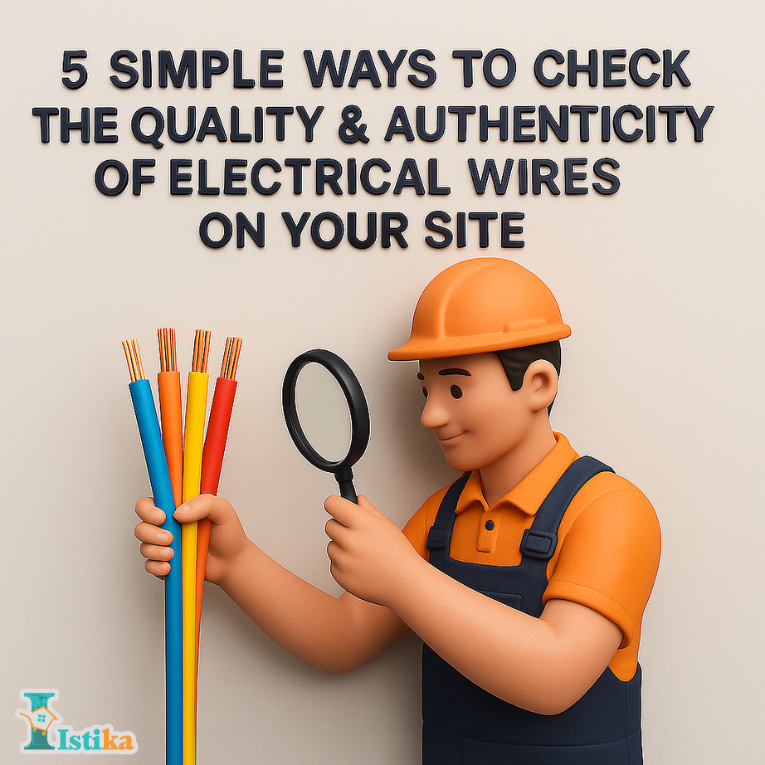
When you are sourcing or installing electrical wiring materials for a project, the last thing you want is poor wires that compromise safety, performance, or long-term reliability. At Istika Building Materials, we understand you are investing in quality wires, genuine brand wires, and safe electrical wiring materials. In this blog, we will walk through five simple ways you can check that the electrical wires on your site are both high-quality and original, so you can avoid duplicates, reworks, and risks to safety.
1. Check the Packaging, Labels & Manufacturer Details
One of the easiest first steps is to inspect how the wire is packaged and what’s printed on it. Good-quality wires from reputable manufacturers will have:
Clear brand name, model number, or specification on the outer cover of the wire (for example, the copper conductor size, insulation type, and voltage rating).
Manufacturer name or logo, factory address, or batch number. According to industry advice, fake cables often lack full production data or have missing factory details.
Certification marks or legal symbols (such as the BIS/ISI mark in India or other international standard certifications). Without these, how can you be sure it’s genuine?
Packaging shouldn’t be weak or just generic. A good bundle will have consistent weight, uniform length, and proper labels. One paper says that inferior wires often show a rough appearance, uneven cover thickness, and missing printing.
So, when the delivery arrives at your site, don’t accept a coil of wire just because it looks cheap; inspect the marking, check if the brand is correct, and verify the packaging. This helps you weed out fake or low-quality “wiring materials.”
2. Look at the Conductor Material & Insulation Quality
After passing the packaging inspection, next you want to check the physical material of the wire itself: the conductor (typically copper) and the insulation around it. Because at the end of the day, good electrical wires depend on good copper conductors and proper insulation. Here are a few checks you can do:
Pull out a small section of the wire and expose a little conductor. A bright, clean copper conductor (reddish colour) is a good sign. Dull, dark, or uneven color may suggest impurities or poor copper quality.
The insulation should feel uniform and smooth and should not break, crack, or rub off easily. Some sources advise twisting the insulation or bending it: if it cracks, or the insulation rubs off, it’s likely poor quality.
Also check the thickness of the insulation and look for consistency across the wire length. Duplicate or low-grade wires sometimes fake a thick insulation but use recycled plastics or inferior material—over time that ages faster or will leak.
If you are installing wires in a building, remember: the conductor and insulation are your first line of defense. Compromising here can lead to higher voltage drop, overheating, fire risk, or premature failure.
3. Check Weight, Flexibility & Physical Handling
Another important test (especially on-site) is how the wire behaves physically. You want to ensure the electrical wires are not only correctly specified but also meet expected handling quality. Here are things to check:
Weight: Good wires will weigh what they claim (given conductor size and insulation). If a coil feels unusually light for its gauge, it may mean a thinner conductor or poor material. One guidance for fake wires: “wires of good quality are generally within the limits of prescribed weight.”
Flexibility: Especially if you are working in bends, corners, or in wiring channels, the wire must bend smoothly without bending, cracking, or showing damage. Poor quality wires often stiffen, crack, or have insulation that starts to break under bending.
Surface look and feel: Run your hand along the wire. Does the insulation feel consistent? No cracks, no uneven seams, no weird greasy patches. If you see uneven thickness, or the outer layer looks scrappy, that’s a warning sign.
By making this quick physical check when you receive the wiring materials on-site, you catch many issues early before installation.
4. Verify Certifications, Test Reports & Credibility
Having a good appearance and physical quality is essential, but equally important is verifying that the electrical wires are authentic, traceable, and certified. Because many fake or sub-par wires skip the proper certification and traceability. Here’s what you should do:
Ask for the manufacturer’s test certificate/report for that batch: e.g., insulation resistance test, voltage withstand test, and conductor resistance. Standard cable testing labs list these as basic tests for wire/cable quality.
Check the brand’s authenticity: Are the logos right? Are there holograms/seals? Is the batch number genuine? Some fake wires simply reuse boxes or labels. For authenticity, one source says, “Look at if there is a quality system certification; ask the supplier whether the qualification certificate is standard; check the wire if it has the factory name, factory address, inspection seal, and production date.”
Credibility: Ensure you have documentation linking the wire batch to purchase, delivery, manufacturer, and test results. For large projects especially, this becomes important for warranties, future servicing, or regulatory compliance.
According to standards: Ensure the wire meets national/international standards relevant in India (for example, the BIS/ISI mark or other recognized standards). Without such standards, you are exposing the project to risk.
By making this step part of your purchase and site acceptance process, you protect yourself and your customer.
5. On-Site Installation Inspection & Post-Installation Monitoring
Even after you accept the wires and install them, quality control continues. Because quality wiring materials plus correct installation practices lead to long-term reliability. If you skip installation checks, even good wires might underperform. Here are key practices:
Visual inspection after installation: Look for any damage to insulation during routing, bending, or termination. Wires must not have cuts, damage, or cracks at bends or joints. These damage points speed up failure.
Proper termination and connector checks: Make sure the conductor fits properly, the insulation is stripped, and the connection is tight. Loose or improper termination can cause heat buildup, higher resistance, or failure.
Monitor during installation: After you power up the wiring, check for any hot spots, abnormal behavior, or insulation smell. Early detection of issues is easier than later.
Regular inspection: For critical wiring (e.g., main distribution, large loads), consider regular inspection of insulation resistance, conductor temperature, and any visible stressing of wires, especially in high-current zones. Over time, even good wires can degrade if stressed, overheated, or poorly handled.
By including these installation and post-installation checks, you give yourself the assurance that your wiring supply and installation are top quality.
Final Thoughts
In summary, before you commit to electrical wires on your site, run through this checklist:
Check the packaging, brand marking, and manufacturer details.
Inspect the conductor material and insulation quality.
Feel and handle the wire: weight, flexibility, and physical appearance.
Verify certifications, test reports, and traceability of the wire batch.
Ensure correct installation, then monitor post-installation for any early signs of issues.
At Istika Building Materials, we are committed to supplying authentic brand wires and high-quality electrical wiring materials and offering you the peace of mind that your project is safe, reliable, and built for the long run. Choose quality wires, follow the checks, and your wiring systems will stand the test of time.
Want help buying the right wires? Reach out to us, and we will guide you to genuine brand wiring, test certificates, and smooth site delivery. Because when it comes to electrical wiring on your site, wasting money simply isn’t worth it.