


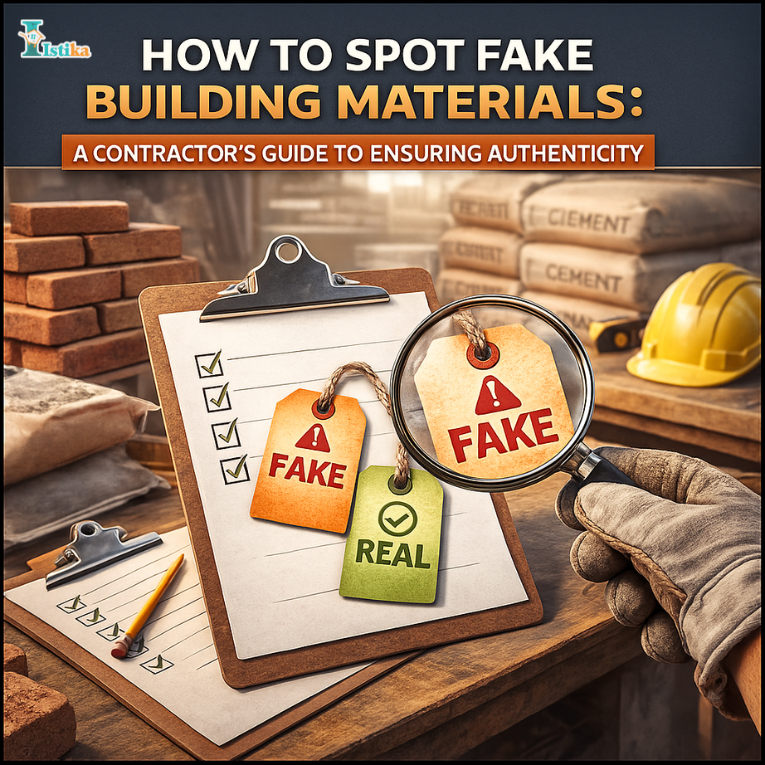
When you are building a house or even doing a small renovation, the last thing you expect is fake building materials slipping into your project. But honestly, it happens more than we think. In the rush of buying cement, bricks, electrical wires, steel, and other construction materials, many contractors unknowingly pick up duplicate or low-quality products. And these fake materials don’t just waste money; they can completely weaken the strength of the building.
At Istika Building Materials, we deal with this issue every day because customers keep asking how to identify genuine materials and avoid the fake ones. So, this blog is more like a contractor-friendly guide. Not too technical. Easy to follow. And it helps you check authenticity before you buy anything.
Let’s break it down step by step.
The construction industry in India is growing fast, especially in cities like Hyderabad, Vijayawada, Guntur, and anywhere else where new houses come up almost every month. High demand always attracts cheap duplicates—fake cement bags, duplicate electrical wires, low-grade steel rods, and even duplicate plumbing items.
These fake construction products look almost real at first glance. Same color, same logo, same packaging style. But the performance? Not even close.
1. Fake cement gets lumpy very fast
2. Duplicate electrical wires heat up easily
3. Cheap steel bends without pressure
4. Fake waterproofing chemicals don’t stick properly
So if you are a builder or homeowner, the only protection is awareness.
1. Start With the ISI Mark – The First Line of Defence
One of the simplest ways to identify genuine materials is to look for the ISI mark, especially on products like: Cement, Electrical wires and cables, Pipes, Steel, Switches But remember, just the ISI logo is not enough. Fake sellers print the ISI logo on duplicate materials too.
What should you check?
The 7-digit ISI license number: Every real ISI-certified product has a unique license number. Fake materials usually skip this or print a random one.
Check if the logo is sharp and properly printed: Original manufacturers follow proper printing standards. Duplicate ones look slightly blurry or crooked.
Cross-check the ISI number online: This is something even most contractors don’t know. You can verify ISI numbers directly on the BIS website. It takes 10 seconds and saves you lakhs later.
2. Look Carefully at Packaging – It Tells More Than You Think
When we supply cement, bricks, steel, or electrical materials through Istika Building Materials, customers often ask how we confirm original packaging. We follow a checklist that you can also apply.
For cement bags:
Check the stitching on the top as original bags have even, strong stitching
Look for the manufacturing date (fake ones rarely print proper dates)
Logos are crisp, not faded
Weight feels consistent (fake cement bags are often underweight)
High-demand brands like Ultratech Cement, Ramco Cement, Priya Cement, and Nagarjuna Cement are the most duplicated in local markets, so checking packaging is a must.
For electrical wires and cables:
Authentic Polycab, Havells, Finolex wires have holograms
Box printing is sharp, not pixelated
Gauge thickness is uniform
ISI mark is present with license number
For steel (TMT bars):
Every rod has a brand engraving
Fake steel usually has uneven embossing
Real 550D or 500D steel does not bend easily; fake ones bend too much
Color bands at the ends should match the brand’s official color code A little attention goes a long way.
3. Check the Product Weight and Dimensions
Fake construction materials often cut corners by reducing weight.
Examples:
Fake cement bags weigh 46–48 kg instead of 50 kg
Duplicate bricks are lighter and easily breakable
Cheap steel rods weigh less than standard per-meter weight
Electrical wires have lower copper content
You don’t need fancy tools. Just lift a few bags or rods and compare. Contractors with experience can spot the difference instantly.
4. Compare Prices – If It’s Too Low, Something’s Wrong
This is a major red flag. When you search for cement price online, steel price online, brick price, or electrical wire price, you see that all major brands stay within a particular price range. If someone offers Ultratech Cement at ₹280, Polycab wire 1 sq mm at half price, TMT bars at huge discounts… there’s a high chance something is off.
Manufacturers maintain minimum selling prices. Genuine dealers never sell at unrealistically low prices. At Istika, we see many customers get cheated because of “cheap rate deals” offered by offline sellers. Always compare prices with trusted online platforms like Istika Building Materials before buying.
5. Buy Only From Authorized Dealers or Trusted Online Stores
One of the easiest ways to avoid fake materials is simple: don’t buy from unknown or suspicious suppliers. Authorized dealers follow brand rules and do not handle duplicate products. When you buy building materials online from Istika:
You get 100% original and brand-verified products
Direct sourcing from manufacturers
Digital invoices
GST compliance
Delivery directly from brand warehouses
This removes 90% of the risk.
Offline shops in local markets often mix genuine and cheap duplicate stock. So staying careful is important.
6. Check Batch Numbers, Manufacturing Date & QR Codes
More brands are now adding QR code verification on: Cement bags, Paint buckets, Electrical wires, TMT bars, and Waterproofing chemical cans. Just scanning with your phone shows real-time product authenticity.
If the QR code doesn’t scan or shows an error, it’s better to avoid that item. Batch numbers also help trace the product back to the factory. Fake materials usually don’t have correct batch markings.
7. Look at Performance Signs (Practical Test)
Sometimes even packaging looks perfect, but the material still feels doubtful. In such cases, contractors follow simple field tests.
For cement:
Real cement feels smooth and slightly cool
Fake cement feels grainy
When pressed, real cement leaves a faint color, not too dusty
For bricks:
Genuine bricks give a ringing sound when tapped
Fake ones sound dull
Good quality bricks don’t break easily when thrown from waist height
For electrical wires:
Real wires feel flexible
Fake wires feel rigid due to poor insulation
Copper inside should be bright, not dull
These small checks can save you from big structural issues.
8. Trust Experience – If Something Feels Off, Don’t Buy
Most contractors say the same thing: fake materials look “slightly odd.” It may be the finish, the color, the weight, or just the overall feel. Trust your instinct.
If you suspect anything, don’t purchase, ask for a bill and GST number, verify brand information, and compare with known genuine products. A few minutes of inspection can prevent future problems like cracks, wiring failures, water leakage, and weak walls.
Final Note: Always Choose Trustworthy Sources for Building Materials
Construction is not something you get to repeat. Once a foundation is laid or wiring is done inside the walls, changing it is nearly impossible. That’s why choosing authentic building materials is not just about saving money; it’s about safety, durability, and long-term peace of mind.
At Istika Building Materials, our focus is simple: Deliver 100% original and top-quality materials directly to your site anywhere in Hyderabad and across India. No duplicates. No compromises. Only genuine brand-certified products.
If you are buying cement, steel, bricks, aggregates, electrical wires, paint, or any construction materials, be sure to check authenticity using the steps above. And whenever possible, buy from verified online suppliers like Istika to stay safe.