


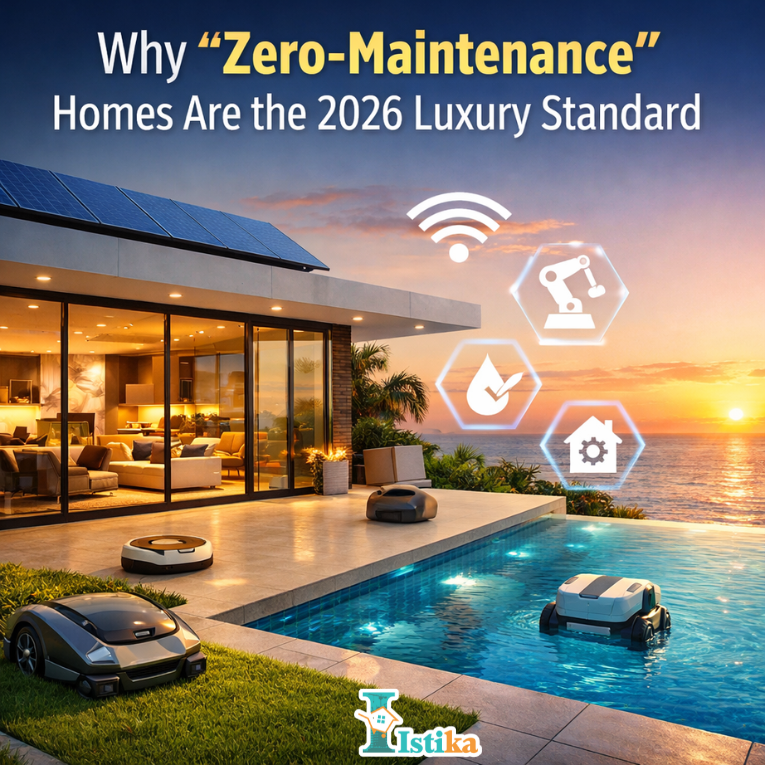
Luxury has changed. Quietly. And most people didn’t notice it happen. Earlier, luxury homes were all about size. Bigger plots. Bigger rooms. More marble. More shine. But now, especially as we move into 2026, luxury means something very different. It means less effort. A zero-maintenance home is no longer a trend. It is becoming the new standard of premium living.
At Istika Building Materials, we see this shift every day. From architects. Builders. Even first-time home buyers. Everyone is asking the same thing now. “How long will this last?” “How much work will this need later?” That’s where zero-maintenance homes come in.
Let’s be clear. Zero-maintenance doesn’t mean no maintenance at all. That’s a myth. What it really means is minimum effort, minimum cost, and long life.
A zero-maintenance home uses materials that:
1. Don’t crack easily
2. Don’t fade fast
3. Don’t need repainting every year
4. Don’t demand constant repairs
These homes are built with smart material choices, not just expensive ones. And that’s the real luxury now. Smart decisions.
Post-pandemic living changed priorities. People spend more time at home. They work from home. They invest emotionally in their space. But they don’t want to spend every weekend fixing something.
In 2026, homeowners want:
Peace of mind
Long-lasting construction
Low recurring costs
Clean, modern finishes
This is why zero-maintenance homes are becoming the default aspiration. Luxury is not loud anymore.
It’s quiet. Stable. Reliable.
Let’s talk money. Real money. Labor costs are rising every year. Skilled workers are harder to find. Even basic repair work has become expensive. A home that needs repainting every 3 years. Plumbing fixes every monsoon. Tile replacements again and again. That’s not luxury. That’s stress.
Zero-maintenance homes reduce these long-term expenses massively. Over 10–15 years, the savings are huge. This is why builders and homeowners now prefer durable building materials, even if the initial cost is slightly higher. Long-term thinking. That’s the 2026 mindset.
The heart of a zero-maintenance home is material selection. Not branding. Not looks alone.
Modern cement and concrete solutions are designed for strength and longevity. They resist cracks. Handle weather changes better. And stay stable for decades.
Using trusted cement brands and proper concrete mixes reduces structural issues later. Which means fewer repairs. Fewer worries. This is a basic foundation step. Literally.
Traditional bricks absorb water. They age faster. AAC blocks offer better insulation, lower water absorption, and cleaner finishes. They also reduce plaster thickness. Which reduces cracking. That’s maintenance reduced at multiple levels.
Exterior paint used to be purely aesthetic. Not anymore. Now, weatherproof paints protect walls from UV damage, rain, and pollution. They last longer. Fade slower. Which means repainting after 8–10 years, not 3–4. That’s real value.
Wood looks good. But it demands care. UPVC doors and windows don’t warp. Don’t rust. Don’t need polishing every year. They handle heat, rain, and dust easily. For modern homes, this has become a zero-maintenance essential.
This is something people often overlook. Low maintenance means fewer replacements. Fewer repairs. Less waste. That makes these homes environment-friendly by default.
When materials last longer, they reduce resource consumption. That aligns perfectly with sustainable construction goals. In 2026, luxury is also responsible.
Cities are busy. Life is fast. Urban homeowners don’t have time to supervise repairs. Or chase contractors. Or deal with recurring problems. They want homes that just work. That’s why zero-maintenance homes are gaining massive popularity in metros like Hyderabad, Bengaluru, Chennai, and Pune.
For online platforms like Istika Building Materials, this demand is clear. Buyers are actively searching for:
→Durable construction materials
→Long-lasting cement brands
→Low-maintenance building solutions
→Modern home construction materials
The search behavior itself has changed.
Smart builders already understand this. A zero-maintenance home is easier to sell. It reduces post-handover complaints. It builds brand trust. Projects marketed as “low maintenance” or “future-ready” attract premium buyers instantly. By 2026, this will no longer be a selling point. It will be expected.
Another major shift is how materials are sourced. Builders and homeowners no longer want to visit 10 stores. They want clarity. Comparison. Convenience.
Online building material platforms like Istika Building Materials make it easier to choose the right products — cement, blocks, aggregates, electrical materials, doors, windows, and more all in one place.
Better choices lead to better homes. And better homes lead to lower maintenance. It’s a connected ecosystem.
This is important to say. Low maintenance does NOT mean cheap materials. It means the right materials. When corners are cut, maintenance increases. Cracks appear. Finishes fail. Costs rise. Zero-maintenance homes demand planning. And quality sourcing. That’s where experienced platforms and trusted suppliers matter.
In 2026, luxury homes won’t scream for attention. They will quietly stand strong. No frequent repairs. No constant upgrades. No weekend maintenance dramas. Just a solid home. Built right. Built once.
Zero-maintenance homes are not a trend. They are a reflection of how people want to live now. And at Istika Building Materials, this is exactly the future we help build. One smart material choice at a time.